Thứ Năm, 27 tháng 2, 2014


Rainbow Stamp News March 2014

RSN March cover

Hi !

I have just published March 2014 issue of Rainbow Stamp News on Blog. It can be viewed at following link :

http://rainbowstampnews.blogspot.in/2014/02/rainbow-march-2014.html


If you find problem in opening the  link please also try following links ..

http://rainbowstampnews.blogspot.in/ ( Indian Readers)

http://rainbowstampnews.blogspot.com/  ( Overseas Readers)

Thứ Hai, 17 tháng 2, 2014


Cover from Latvia


Sochi 2014 - Skeletons

001

Thanks to Limanski E.N. , Riga – Latvia for this Rainbow colored FDC

SP Cover from Chauri Chaura cancelled on historic Chauri Chaura day – 4th Feb 2014

image

001

Thanks to Ashwani Dubey - Gorakhpur

Thứ Bảy, 4 tháng 1, 2014

image

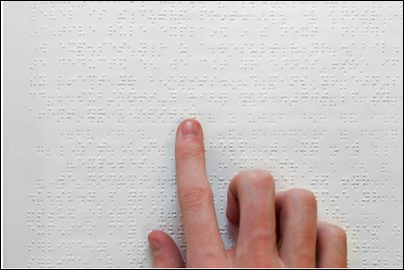
4th January – World Braille Day

Today is world Braille Day. World Braille Day is annually celebrated on January 4, the birthday of Braille inventor, Louis Braille. The day recognizes the contributions of Louis Braille in helping blind and visually impaired people to read and write. This Post is a tribute to Lois Braille, the angel to millions and millions of visually impaired persons in The world !!

image  image

Braille - a code used by the visually impaired worldwide

Braille is a code that uses bumps and indentation on a surface to represent alphabets and letters and can be recognized by touch. Louis Braille, a French man who was blinded in an accident at a very young age, invented it. Before Braille invented this form of communication, visually impaired people read and wrote using the Haüy system which embossed Latin letters on thick paper or leather. This was a complicated system that required much training and only allowed people to read, not write. Discouraged by this, Braille at the age of 15 invented the Braille code.

While there are now several different versions of Braille, Louis Braille’s code was arranged in small rectangular blocks called cells with raised dots in a 3 x 2 pattern. Each cell represented an alphabet, number or punctuation.Since Braille is a code, all languages and even certain subjects like mathematics, music and computer programming can be read and written in Braille.


image   image

Louis Braille (4 Jan 1809 – 6 Jan 1852 ) Louis Braille is credited with inventing the Braille language which helps blind people to read as well as write.Louis Braille was born in France. At the age of 3, he accidentally became blind. However, he had a great yearning to be able to read and write properly, despite his disability. An attentive kid at school, at the age of 15, he developed a set of symbols by making raised dots on a piece of paper. The dots could be easily felt by hand, thus enabling even the blind to feel them and hence, read and write.

image image

The language developed by Louis Braille is today known as the Braille language. Louis’s work was not only confined to alphabets. He was passionate about music too, and thus, in the latter part of his life, he even developed Braille language for music. While developing the language for music, he made a point to keep it flexible so that it could be adapted to almost any musical instrument around the world.

image image

Although the system was very useful for those with visual impairment, it was only 2 years after Louis’s death in 1854 that the system was adopted by his school. Soon after its adoption, it grew very popular in the rest of France. The penetration of the system in other countries was quite slow.

image image image

The World Braille Day is celebrated every year to recognize the efforts of Louis Braille. His simple yet effective invention made it possible for blind people to read and write. The World Braille Day is relatively a little known occasion. However, for individuals working for the blind, it is a day of great significance.

image image  image 

Various competitions are organized across cities specifically for the blind. Awareness is also raised about the new technologies coming in the field of Braille language on this day. For example, in the earlier days, a special type of typewriter had to be used in order to write Braille language. Now a days, computers are also equipped to do the job. The World Braille Day is taken as an opportunity by various organizations and philanthropic individuals around the world to help the blind out there.

  image image

The World Braille Day in 2009 marked the 200th birthday anniversary of Louis Braille. It was celebrated around the world, including that in France, where a special exhibition was organized in a museum dedicated to Louis Braille. In India, Belgium as well as Italy, special coins were released with the image of Louis Braille.

image

Thứ Bảy, 26 tháng 10, 2013


Guru Padmasambhavaon

image

Date of Issue : 18 June 2013

Here is a Miniature Sheet issued by Bhutan Post with a Rainbow in its design. The MS was issued to commemorate   the Birth Anniversary of Guru Padmasambhavaon 18th June 2013. Padmasambhava , also known as the Second Buddha, was a  sage guru from Oddiyana,  Padmasambhava is said to have transmitted   Vajrayana Buddhism to Tibet,Bhutan   and neighboring countries in the 8th century AD. In those lands, he is better known as Guru Rinpoche  or Lopon Rinpoche, or as Padum in Tibet, where followers of the Nyingma   school regard him as the second Buddha  .

This beautiful MS covers the themes Rainbow, Mythology and Buddhism.

New Stamps from Ukraine

image

Date of Issue : 14 October 2013

Ukrpochta has issued a beautiful  souvenir sheet  “Generous Ukraine. Autumn” featuring fruits, flowers, mushrooms, birds and many more ...

It is is a continuation of the series “Generous Ukraine. Spring”and “Generous Ukraine. Summer” by the artist Natalia Kokhal. She had this artistic vision to portray Ukraine as women who symbolize seasons: spring, summer, autumn and winter.

The s/s “Generous Ukraine. Autumn” consists of four stamps depicting autumn generosities of the Ukrainian land: rowan (Sorbus aucuparia), watermelon (Sitrullus lanatus), dahlia (Dahlia) and penny bun (Boletus edulis).


Fruits on stamp

image

Ukrainian post issued a new definitive stamp within the series Leaves and Fruits. The stamp depicts Common Pear (Pyrus communis). Pyrus communis, also known as common pear, is a species of pear native to central and eastern Europe and southwest Asia. It is one of the most important fruits of temperate regions, being the species from which most orchard pear cultivars grown in Europe, North America, and Australia have been developed.

Thứ Bảy, 17 tháng 8, 2013


image

Here is a nice cover from Pakistan depicting Rainbow in the background …with Polo Free Pakistan stamp issued on 10 October 2009. I just wish to have this beautiful cover for  my collection on Rainbow…..

Club News

The 25th International Congress of Vexillology


image

The International Federation of Vexillological Associations (FIAV) is an international federation of 55 regional, national, and multinational associations and institutions across the globe that study Vexillology, which FIAV defines in its constitution as "the creation and development of a body of knowledge about flags of all types, their forms and functions, and of scientific theories and principles based on that knowledge."

Since 1969, FIAV has sponsored the biennial International Congresses of Vexillology (ICV). Previous Congresses have been held in Muiderberg (1965),Zürich and Rüschlikon (1967), Boston (1969), Turin (1971), London (1973), IJsselmeer (1975), Washington, D.C. (1977), Vienna (1979), Ottawa (1981),Oxford (1983), Madrid (1985), San Francisco (1987), Melbourne (1989), Barcelona (1991), Zürich (1993), Warsaw (1995), Cape Town (1997), Victoria(1999), York (2001), Stockholm (2003), Buenos Aires (2005), Berlin (2007), Yokohama (2009), Alexandria (2011) and Rotterdam (2013). 26th ICV will be held in Sydney in August 2015.

A Congress consists of presentations of papers on vexillology and the biennial session of the FIAV General Assembly, amid flag-related tours, seminars, and meetings among various vexillologists on specific topics, and ample opportunities for social interaction and networking, usually culminating in a final banquet.

The editor of the ‘Flags and Stamps’ and Cdr K.V. Singh, CEO of Flag Foundation of India were invited from India to present their papers in person in the just concluded 25thInternational Congress of Vexillology (ICV) held in the Engels Congress Center (ECC) in Groot Handelsgebouw, Rotterdam, the Netherlands from 5th to 9th August, 2013, under the auspices of the FIAV. Mr. Chakrabarti and Cdr Singh were amongst  the 36 speakers from all over the world, with subjects ranging across many vexillological themes. This diversity contributed in making the Congress an epoch making one.

The subjects chosen by the editor of ‘Flags and Stamps’ was Swastika, his paper entitled “The Ancient Symbol of Swastika: Its Distortion, Uses and Misuses” was found most interesting, very laudable, it was well balanced with the right nuances, immediately thereafter Cdr. K.V. Singh presented his paper entitled "Ancient and Epic Flags of India" which was well received by the audience with long applause on the second day on Tuesday 6th August, 2013. Mr. Alain Raulet, President of ‘Societe Bretonne de Vexillologie KVV’ of France, was nominated as the Master of Ceremony for the Indian presentations.

image


Mr. Alain Raulet finalizing the details of the Indian presentations

image

Mr. Michel R. Lupant, President FIAV with the Indian participants

The opening ceremony of the 25th ICV was held on 5th August at the Rotterdam International Flag Parade at Boompjes Bouevard, where the flags of the 193 members of the United Nations are waving, including those of 173 nationalities represented in Rotterdam’s population, as a sign ‘welcome to the city’.

The  synopsis of Mr. Chakrabarti's paper :

“Swastika” is an ancient symbol of the prehistoric period - a symbol which has been attributed to ‘good fortune and well-being’ for more than 3000 years or even older. The power-point presentation highlighted the Origins, Uses, Migration and Diffusion of the symbol in Cultures of the Globe. Swastika is considered to be a fine example of Theories of the Parallelism in Human Thoughts – can it be a case of Duplicate or Independent discovery which popped-up in widest Culture Areas, extending almost to the Uttermost parts of the World or is it Transmitted from Person to Person, Country to Country by Migration, or Contact or Communication between the Distant people in Archaic period? No one knows for sure because its true home, the time or place of origin, or, the primitive meaning considered lost in antiquity.
One may wonder how the same auspicious symbol contaminated our mind with its graphic vandalism by a regime whose rise was dramatic and fall was equally as rapid as rise. Precisely 25 years of misuse from 1920 to 1945 made the Swastika image - a hated symbol in Europe and elsewhere, because of an ignominious fascist spearheaded a racial genocide, an unspeakable genocide - but that is according to the speaker is insufficient reason for ignoring the symbol's ancient and historical significance.

The Hakenkreuz (Swastika banner in Nazi style) is  social taboo in India as well. However, the undertone the swastika has in general in the West is absent in India and other parts of Asia. Long before all the Nazi symbols were outlawed in 1945, scholars and historians proved sufficiently that the German claim of Swastika and its Aryan origin were baseless, hence unacceptable from the vexillological point of views.

As a matter of fact, the symbol was not unknown among the pre-Vedic ‘Dravidans’, a peaceful and more advanced culture of South India long before the invading Aryans arrived.Societies practicing Hinduism, Buddhism, Jainism and believer of many other sects - see the sign - as an auspicious sign of good fortune – representing aspects of their faith. They've been doing this from time immemorial - in temples, idols, rituals, decorations, on artifacts, coins and flags.

For more details please visit : Flags and Stamps

From our Readers….

Mr SS Rath of Bhubaneshwar shares here some pics of his World Philatelic Exhibition, Thailand 2013 Visit. He won a Bronze medal in this exhibition for a joint entry with Dr Bibhudatta Mishra of Bhubaneswar.

image   image\

Ind 13  Sl5 (1)


Thứ Tư, 24 tháng 7, 2013


image

Date of Issue : 30 July 2013

Polish Post will issue two colorful stamps on Cycling Race on 30th July . This is a beautiful set of stamps in Rainbow color and collectible item for those collecting on Sports. On 18th July , a stamp on National Regional Products was issued featuring Strawberry. This is a nice item on “ Fruit ” theme.

Cycling Race

image


image

Date of Issue : 18 July 2013

Polish Regional Products

image

Thứ Năm, 27 tháng 6, 2013


Picture 003

Thanks to Mr Wolfgang Beyer, Germany

Picture 003

Pre – stamped Post card with Rainbow

Picture 004

Thanks to Mr Zeljko Vasilik, Croatia

New Pictorial cancellations from Germany

Picture 004

A new pictorial cancellation was be issued on June 24th at 38364 Schöningen and is featuring a prehistoric man holding a spear.

Picture 004


A new pictorial cancellation will be issued on July 1st at 26382 Wilhelmshaven and is featuring a Horsehead Seal.
Postage rates: 0,75 Euro AIRMAIL, 2,80 Euro Registered AIRMAIL.

Picture 003


A new FDI-cancellation will be issued on July 1st at 53113 at Bonn and is featuring a Golden Eagle.

A new FDI-cancellation will be issued on July 1st at 10117 at Berlin and is featuring a Gull.

Interested philatelists may please contact:
Wolfgang Beyer, Vice Chairman of the German Philatelic Collector Group ARGE ZOOLOGIE,
E Mail:  Wolfgang.beyer1@aol.de

nghe nhạc trực tuyếnNấu món chay | học nấu ăn DJ - Ảnh đẹp | xalotinnhanh